
Searching For Hope
One of the more intriguing elements of Korean media I’ve seen over the last decade deals with the ramifications of the separation between North and South Korea. As one of the last remaining direct results of World War 2’s conclusion in the world, the two nations have had an uneasy, and often tumultuous, relationship over the past 80 years. Public opinion has shifted from reunification being impossible, to citizens believing it could happen in their lifetimes, to newer generations seeing it as unnecessary. It’s astonishing how a decision outside its control has come to define the very culture and history of both Koreas to an extent nobody could have anticipated.
This division is something that quickly came to my mind while watching Na Hong-jin’s Hope. While I think the movie paints with too big of a brush, not to mention fails to wrap up its own story in any interesting fashion, the very setting calls back to classic Hollywood films such as Invasion of the Body Snatchers. We’re not talking aliens stealing Americans as an allegory for Russian invasion, but Hope similarly pits an alien force as invading a humble South Korean town after years of inactivity following active conflict against North Korea. It takes place in the fictional city of Hope right on the border of the DMZ between North and South Korea, further driving its point home.
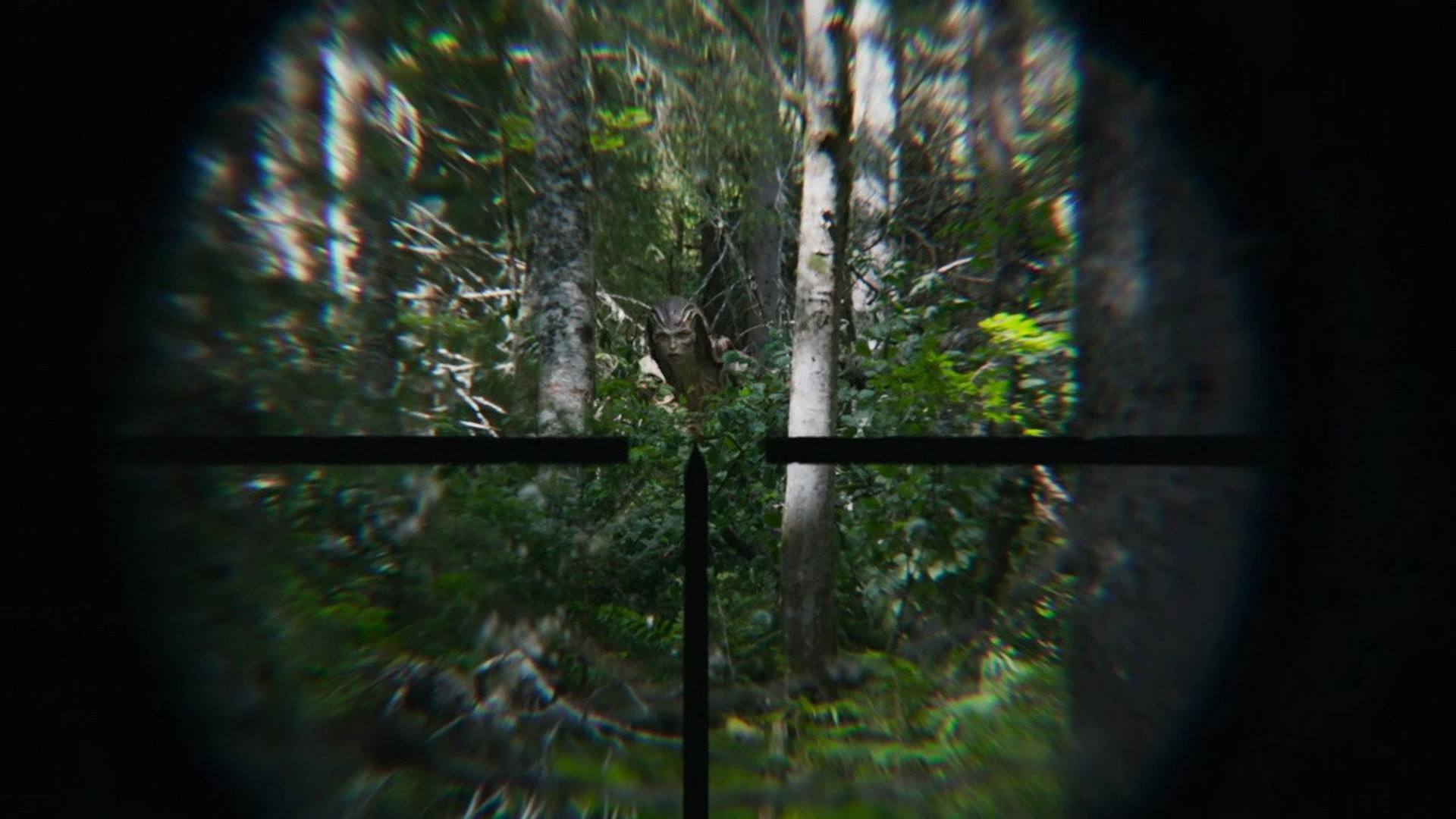
I do believe Hope is a bit clunky in getting this across. It’s hard not to know some of the history of North and South Korea’s cold (and often hot) war, but Na doesn’t even attempt to explain how this town became the way it is or why an alien force even approached Earth in the first place. We eventually learn that the first alien seen in the film was merely looking for its child, which became lost on Earth through whatever means, but why it defaulted to slaughtering humans is unclear. Did the humans attack first? Do the aliens not know how to communicate? Is mass destruction the only reasonable response to searching for a child?
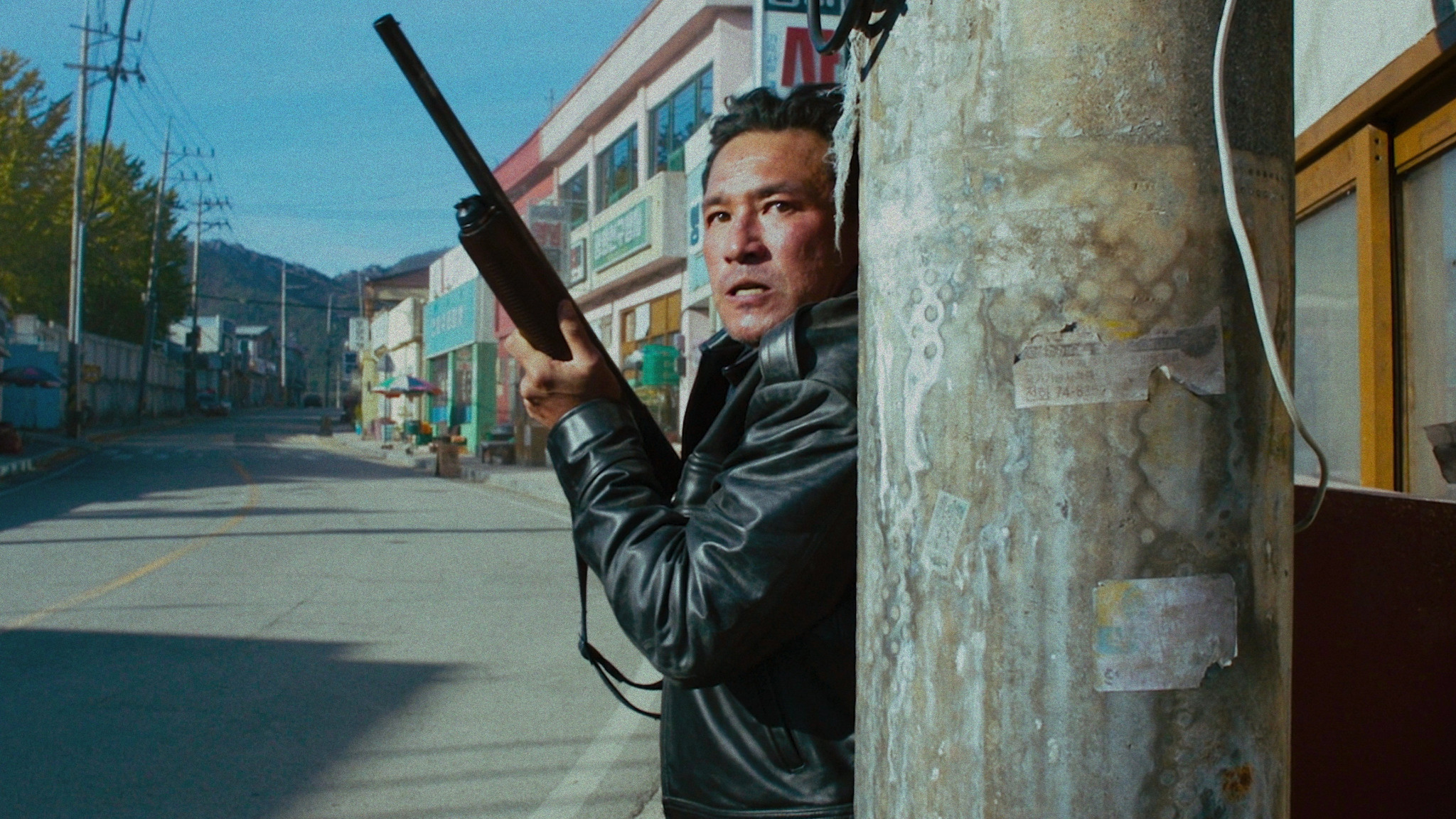
Whatever the answers, Na assumes audiences will be intrigued enough to show up for a sequel as the film ends with zero resolution. Even ignoring the sociopolitical commentary doesn’t help here, because it cuts from one action scene to the protagonists running down a bridge to seek shelter and then a truly awful looking CGI sequence where the aliens converse with themselves. That’s all she wrote, and I hope you’re okay with waiting for however long to see things continue. Maybe humanity is the true evil? I couldn’t say, but that’s not why I decided to write about Hope.
I’m more interested in this trend of inserting North Korean characters within South Korean films and attempting to humanize them. I’m not deeply into Korean cinema, so forgive me if this has been going on longer than I’ve realized, but I noticed the trend start with Squid Game back in 2021. One of the central characters, Kang Sae-byeok (played by Hoyeon, who happens to star in Hope) is a North Korean defector who enters the games in an attempt to earn money to smuggle her parents across the border. While this fact is shocking to the participants, they understand her motivation and attempt to help her progress as far as she can … well, a handful of them do. The rest want everyone dead so they can claim the gigantic cash prize.
From 2026, Ryoo Seung-wan’s Humint portrays a story of North and South Korean secret agents battling it out in Vladivostok, Russia, while investigating an incident at the border. Audiences would naturally believe the North Korean spy is the villain, but it turns out he’s merely trying to rescue a woman that he has personal ties to from getting involved in political infighting. He eventually defects before the end of the film, and it’s clear he isn’t some nefarious bad guy or an individual wishing to dismantle the South Korean state. He’s merely a player caught up in an ongoing battle that got thrust into a position he never asked for.
How about the impossible to believe success of the limited series Crash Landing on You? Written by real-life North Korean defector Kwan Moon-wan, the series is otherwise a fairly typical K-Drama, but it paints a rather realistic and humanized portrayal of North Koreans as just average citizens. The plot concerns a South Korean woman who gets swooped up by a tornado while paragliding (as we all have at one time or another) and eventually crash lands on a KPA captain who decides to protect her from prosecution. The two wind up forming a romantic relationship with the overall message being that reunification is possible if Koreans just had a chance to understand one another.
As I mentioned earlier, recent public opinion among South Koreans is that reunification isn’t necessary. Last year, a poll from KINU noted that 51% of younger South Koreans felt reunification unnecessary, the first time the percentage has weighed that way. Just this year, Seoul National University’s Institute for Peace and Unification Studies showed that 39% of South Koreans believed unification was impossible. Taking that knowledge, why is there such a prevalence of media attempting to persuade public perception to the opposite?
I’m not scholarly enough to attempt an explanation. I can merely offer what I feel Hope is trying to say with its bombastic action and relentless focus. For the majority of its epic run time –Hope runs at 156 minutes– we don’t get much in the way of characterization or insightful dialogue. Hope is almost a throwback to classic action cinema where physical interaction was more important than what characters were saying. Through this, the prime dilemma is caused by the inability to communicate properly, which leads the humans to believing the aliens are simply monsters.
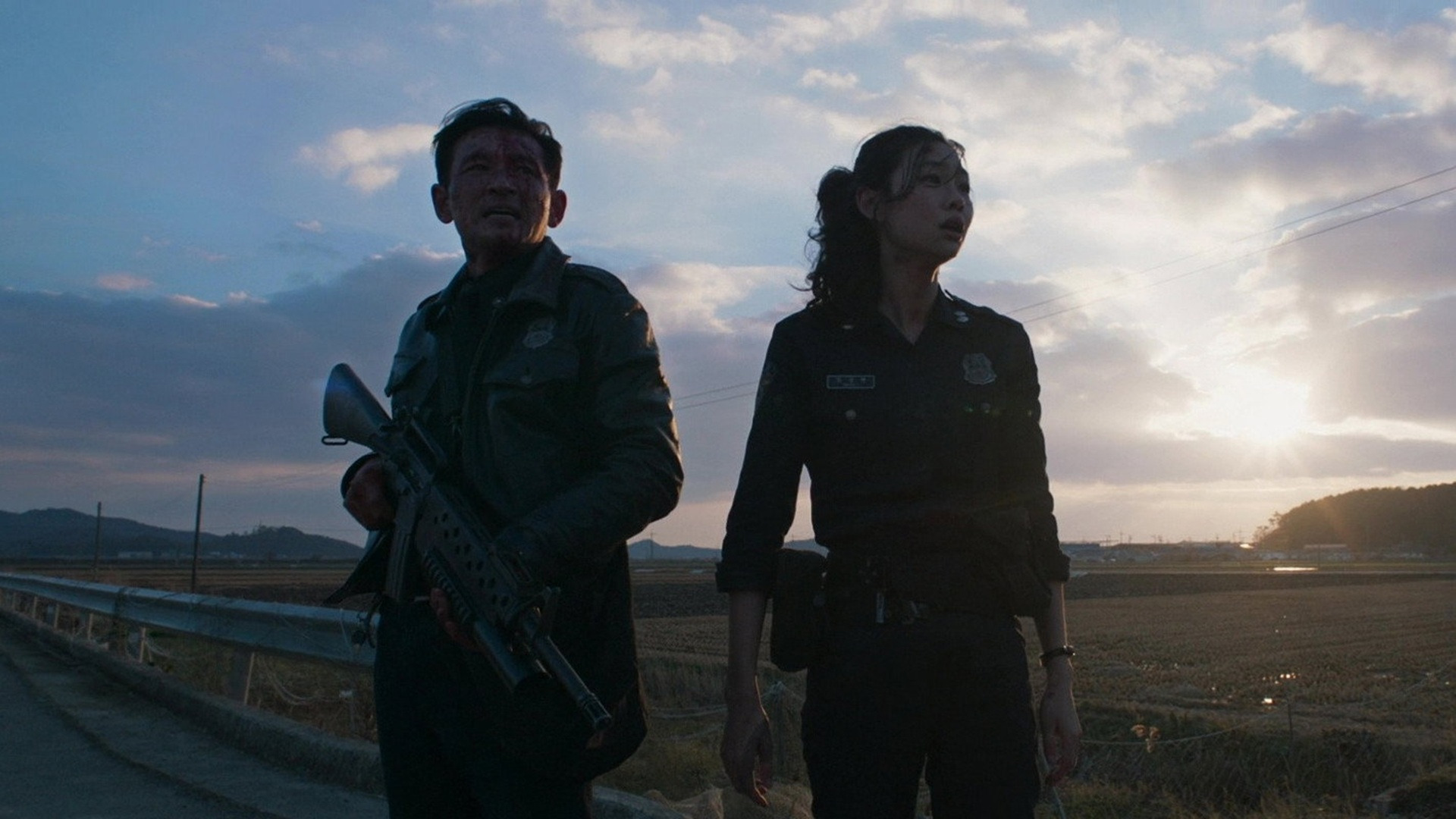
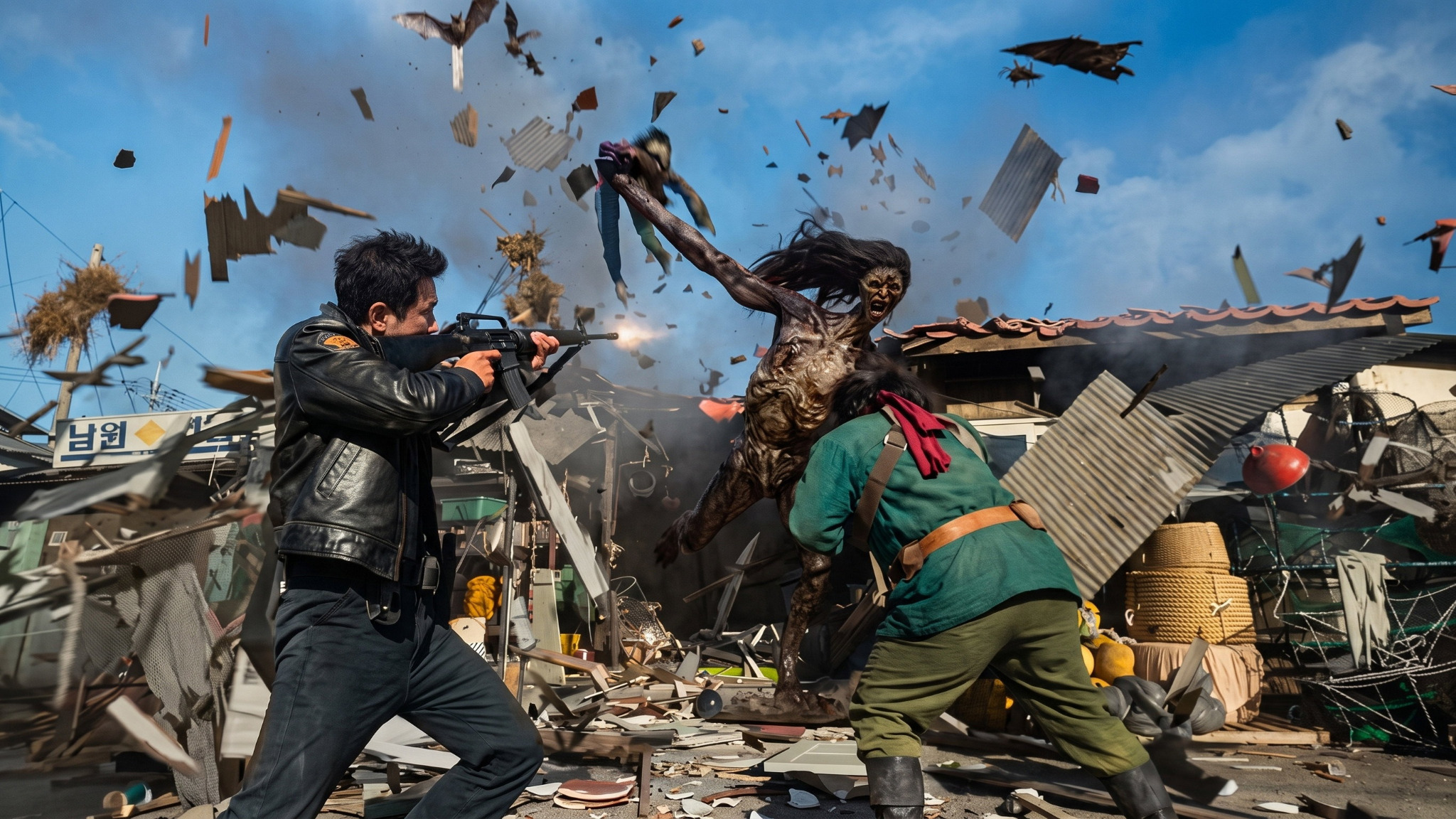
As I said, the aliens never even make an attempt to converse with their assailants and automatically default to rampage mode. Since some of the aliens are Transformers (one has two forms where it can be bipedal before shifting into quadrupedal traversal mode), it’s perfectly understandable why the humans aren’t so chatty. The first hour of the film drives this home efficiently with a slow build up of police chief Ko Bum-seok (Hwang Jung-min) arriving on the scene of a disaster just seconds too late to see the threat. Na teases the audience with action only to pull the rug several times before the gasket bursts and all hell breaks loose. From there, the alien doesn’t just kill a man, but explode his head with another human’s body.
If we view this as Na’s interpretation of North/South Korean relations, then it’s a shocking indictment of both sides of the conflict. The South Korean humans are too impulsive and defensive to allow alien integration, and the North Korean aliens are too savage to ever be welcomed into society. We’ve seen that type of both-sidesing before, but I really don’t know what Na wants with Hope. A Toronto Star poll from 2018 noted that 52% of South Korean men in their 20s viewed North Koreans as “the enemy,” but Na is 52-years-old. He’s certainly past the age of lingering teenage angst. Perhaps he is simply fed up with the constant feuding and would rather both countries get on with their lives.
Critic David West, reviewing the film for his Substack, is similarly confused about what Na wants to achieve with Hope. “Na can’t seem to decide where he wants our sympathies to lie,” West writes. “The trigger-happy humans are frightened of the unknown and eager to kill what they don’t understand. Yet if the aliens are misunderstood, they’re still slaughtering people left and right.” It’s that mixed type of messaging that muddies whatever sociopolitical insight Hope could have provided. To be extra cheesy, the film ends with the general sentiment of there being “hope” for both sides of the conflict, but it falls almost entirely flat thanks to bizarre cameos from Alicia Vikander and Michael Fassbender speaking a made-up alien language while ugly CGI creatures attempt to emote at the audience.
In some ways, I’m reminded of Paul Verhoeven’s Starship Troopers, which paints its human characters as neo-Nazis invading planets to subjugate alien forces. The audience is meant to sympathize with the Arachnids, who are purposely designed to be as ugly as possible to question your own morality. While I don’t believe the film is particularly good (I cannot deal with the awful teenage romance nonsense or the shoddy acting), the overall theme of the movie is very clear: fascist rulers will “other” anyone they deem lesser and flood the state with propaganda until their citizens believe the lies. Hope, however, is not that.
Whatever the intention, Hope is at least intriguing for daring to put the North and South Korean conflict on screen at a global scale. The film has been a big success in South Korea, as well, so maybe in five or so years, we’ll have a better answer to what Na wants to say with the movie. For now, the only thing that really intrigued me in Hope is how desperate it makes everyone come off as. I suppose that is a big statement, in and of itself.
0 Comments Add a Comment?