Back in 2024, I reviewed Bushido as part of NYAFF and wrote, “samurai films have mostly fallen out of favor with modern Japanese audiences.” I made the statement in comparison to how Westerns aren’t really a part of modern Hollywood, and was maybe hoping that the tides would turn for the once dominant genre. In the years since, I’ve watched a samurai film at both subsequent NYAFF’s, checked out 11 Rebels by Kazuya Shiraishi (coincidentally the director of Bushido), and watched the Netflix series Last Samurai Standing. I guess audience appetite for Edo-period fiction exploded.
That doesn’t have much to do with Samurai Vengeance, however. I just couldn’t think of an interesting way to start this review that wouldn’t read like a spoiler. In the process after watching the film, I kept debating with myself about how I should approach this piece. Do I spell out the plot and risk spoiling the twist? Do I describe scenes with vague terms and confuse readers? Will enough people even read this review to find out about the film?
No matter what I do, I’m at an impasse. Since I believe the journey in Samurai Vengeance is much more important than the destination, I will spare you most of the details. Just know that if you’ve ever appreciated the art of performance and the power that acting can accomplish, you’re bound to find Samurai Vengeance an enjoyable and thought-provoking samurai story.
Samurai Vengeance
Director: Takashi Minamoto
Release Date: February 26, 2026 (Japan), July 25, 2026 (NYAFF)
Country: Japan
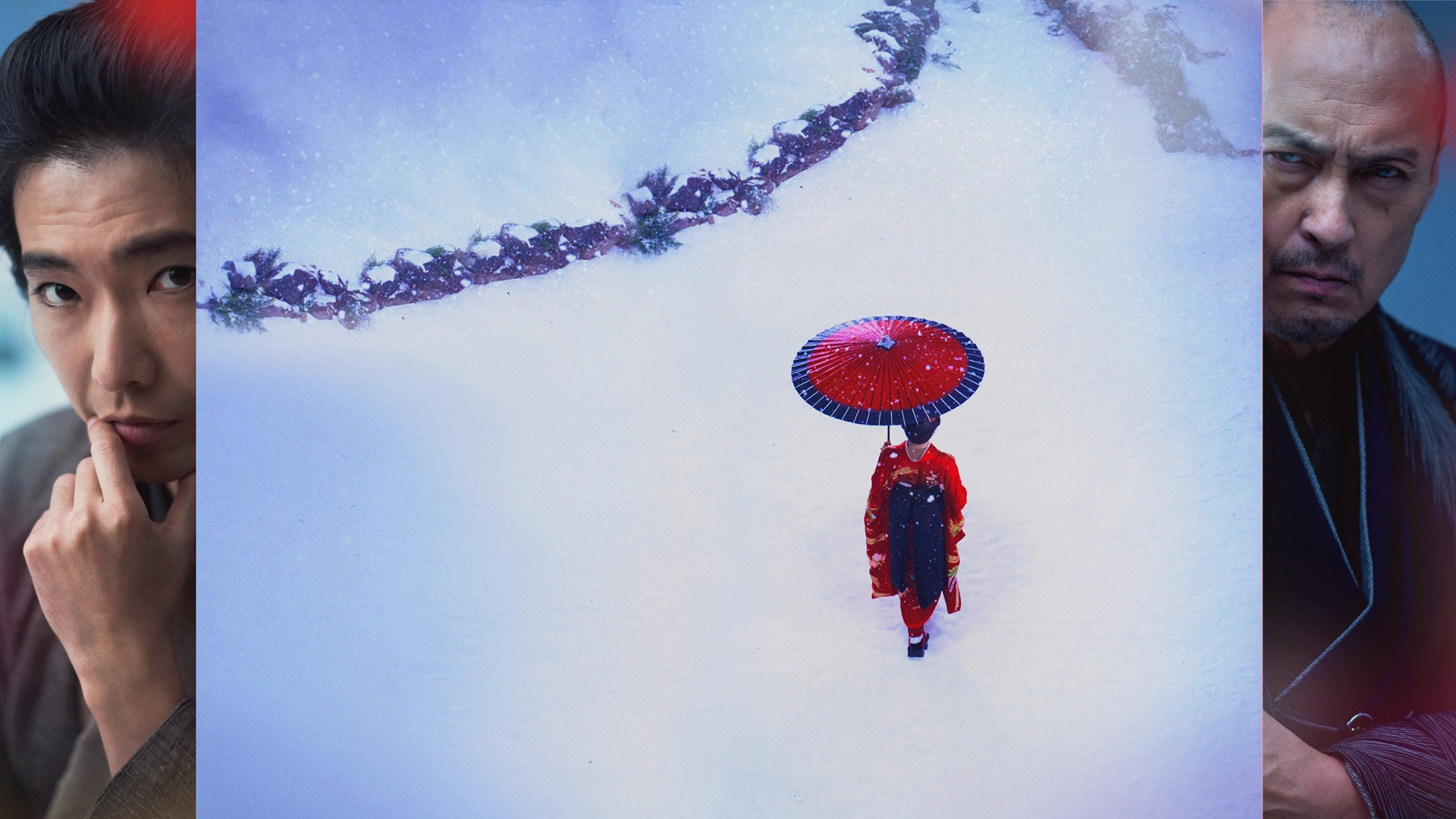
I’m going to borrow NYAFF’s description of Samurai Vengeance to get you up to speed. One night in Edo circa 1810, snow is falling outside the Morita-za theater when a dramatic encounter occurs between Kikunosuke (Kento Nagao) and Sakubei (Kazuki Kitamura). Ripping theater patrons out of the landmark kabuki show Chushingura, Kikunosuke proclaims he is there to take vengeance on his father’s killer, the man called Sakubei. The two clash in front of an astonished crowd, throwing each other around a small garden before winding up in shed secluded from public eye. After some time, Kikunosuke emerges with Sakubei’s head, his revenge complete and his name carved into legend.
The story then picks up 18 months later when Soichiro Kase (Tasuku Emoto) comes to Morita-za to do some investigating. Claiming to have ties to Kikunosuke’s family, Soichiro attempts to paint a clearer picture of what happened that night. His primary motivator is that the Kikunosuke he knows is simply no killer. The man is timid, gentle, and most certainly not showy. Is it possible that someone misinterpreted what happened that night?
That’s all I feel comfortable saying with regard to plot. Samurai Vengeance is very much a film that highlights the power of performance to capture the imagination of a captive audience. While it’s not initially clear, the opening battle puts a highlight on that. When Kikunosuke reveals himself, some workers in the courtyard shine spotlights on him to illuminate the battle for onlookers. Even the movements Kikunosuke utilizes appear more theatrical in their style, making broad strokes and swings to emphasize power and intent.
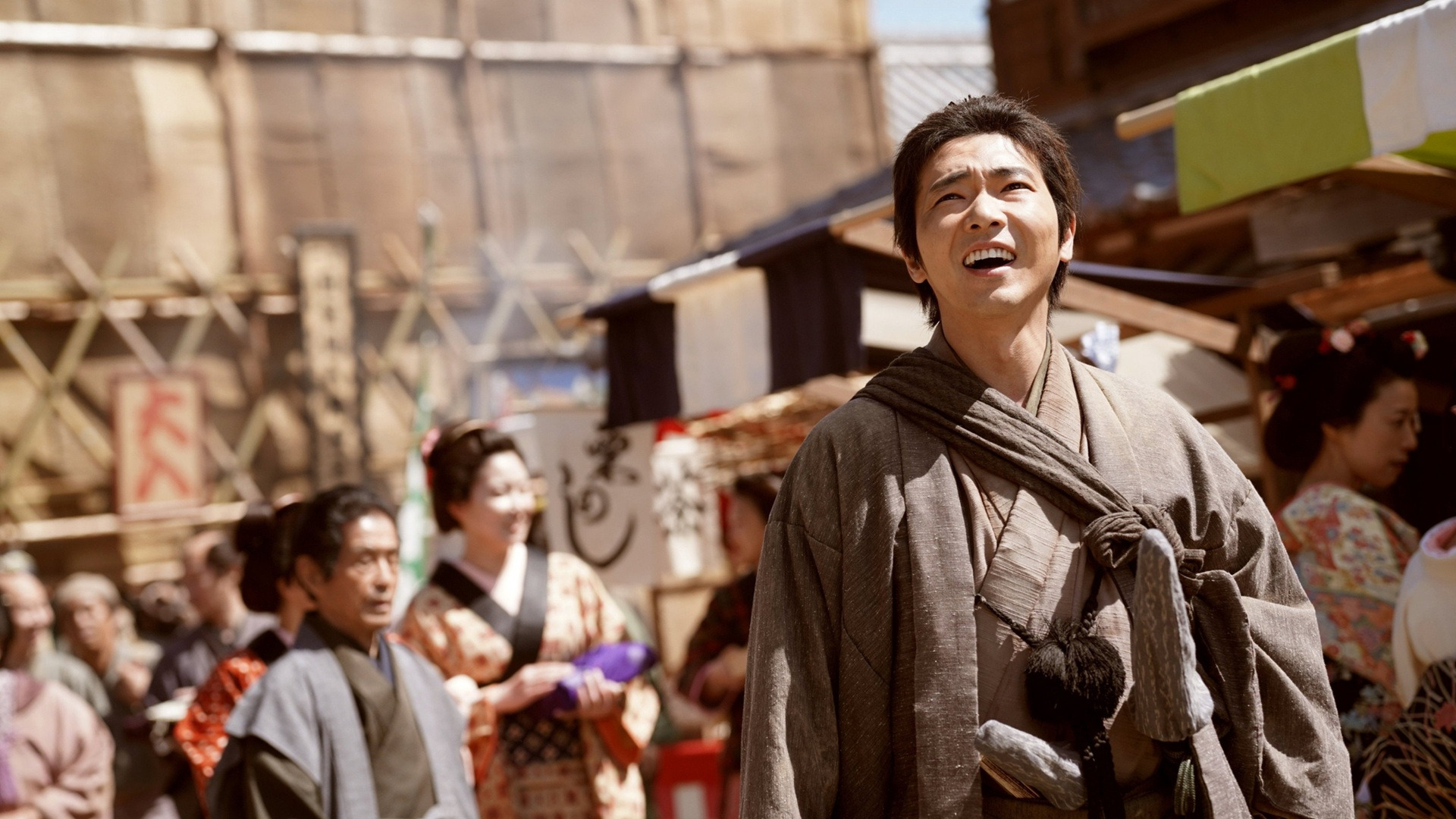
At first, I assumed Soichiro’s findings were going to paint a picture of a disgraced samurai who told his home village a lie, and the film kind of leans towards that. In discussions with some of the individuals who were present that night, Soichiro starts to understand that something is amiss with Kikunosuke’s tale. While the movie never evokes film noir trappings (it’s certainly not narrated, cynical, or dark), there is a vibe of detective storytelling here that hooks the audience. You really do want to know what Soichiro is stumbling upon in his investigation, even if it means the end of a heroic legend.
It's really a third act twist that recontextualizes the story and gives Samurai Vengeance a beautiful edge I wasn’t expecting. A few story developments feel a little too convenient for my liking, but as I said, there is a musing on the wonderful world of stage craft and acting that hits at the very core of why we watch films (or plays, if you’re into live theater). Stories like this don’t necessarily hit on societal issues, but they give us an escape that is brought to life by dedicated individuals wishing to transport us to another world.
This is a point I made in a monthly column years ago when looking at Lau Kar-Leung’s Legendary Weapons of China. There are a series of events portrayed by late actor Alexander Fu Sheng where he puts on a performance for the public to convince them he is a martial arts god. Through the usage of trick wires, stunt performers, and pyrotechnics, he fools citizens into thinking he can bend reality to his whim, not to mention defeat even the strongest of foes. While it is played for laughs, it touches on the artifice of performance and how filmmaking (or in the case of Samurai Vengeance, stage play) is accomplished by tricking the audience at some level.
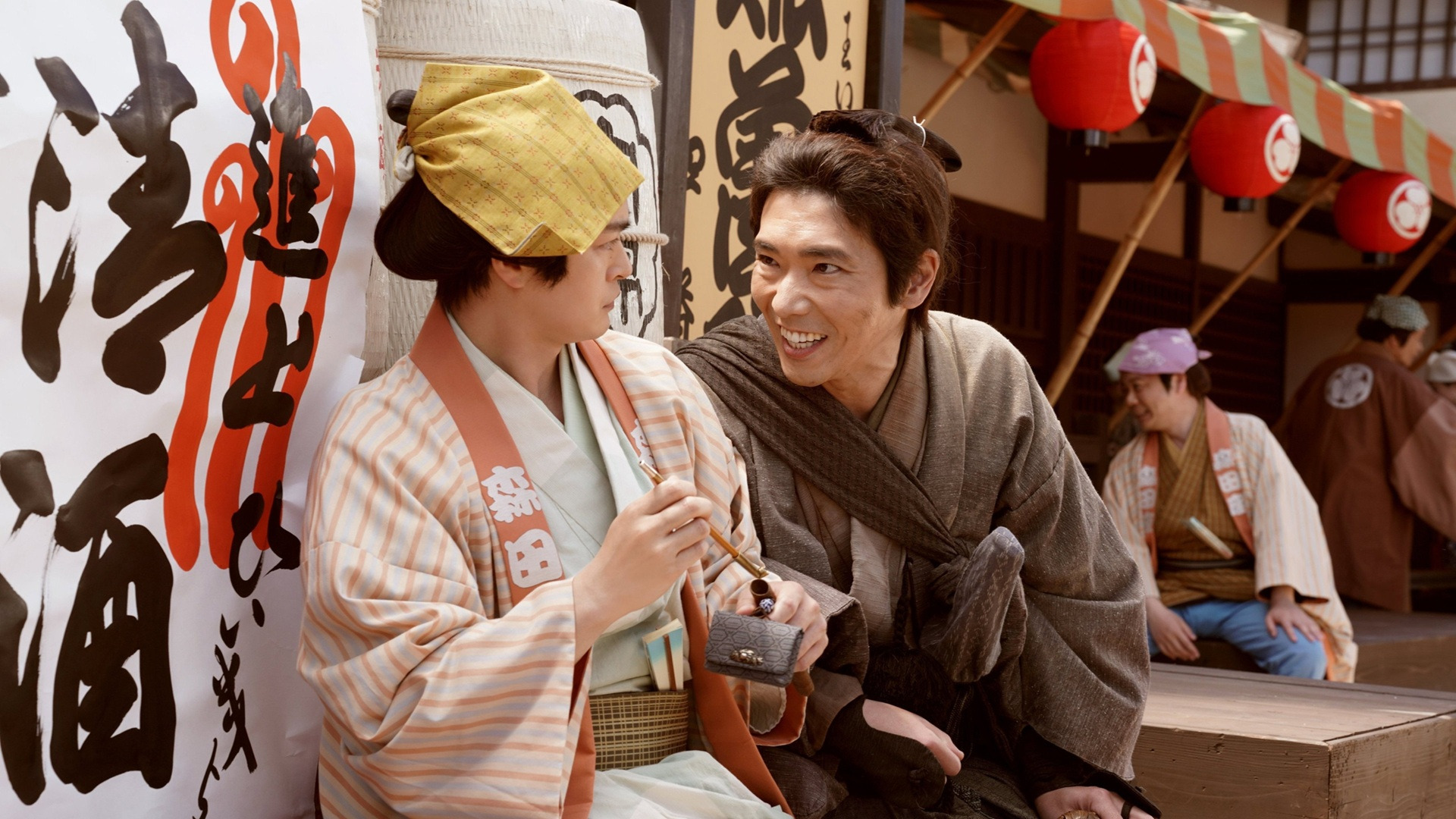
Sadly, even mentioning that might rob Samurai Vengeance of its excellent late-film twist. With most films nowadays, I can typically tell where things are going when it comes to plot developments, so I try my best to look deeper at the context and subtext of certain moments rather than the sequence of events. Samurai Vengeance can be pretty dense with dialogue, so I figured I was safe making assumptions early on. That’s exactly how director Takashi Minamoto wants you to think, though. Through his usage of specific tropes and the framing of the film’s narrative, he sets expectations one way before obliterating them towards the end.
All that is to say it makes for an enjoyable examination of samurai fiction. Like classic samurai films, there is mention of how the code of bushido robs its followers of choice, not to mention can turn otherwise decent men into killers. There’s a struggle against loyalty to the cause and how that destroys families in the process. At one point, there is even a crossdresser character who highlights gender dynamics in stage productions and how makeup and costuming can transform one’s appearance. It is a layered movie, that’s for certain.
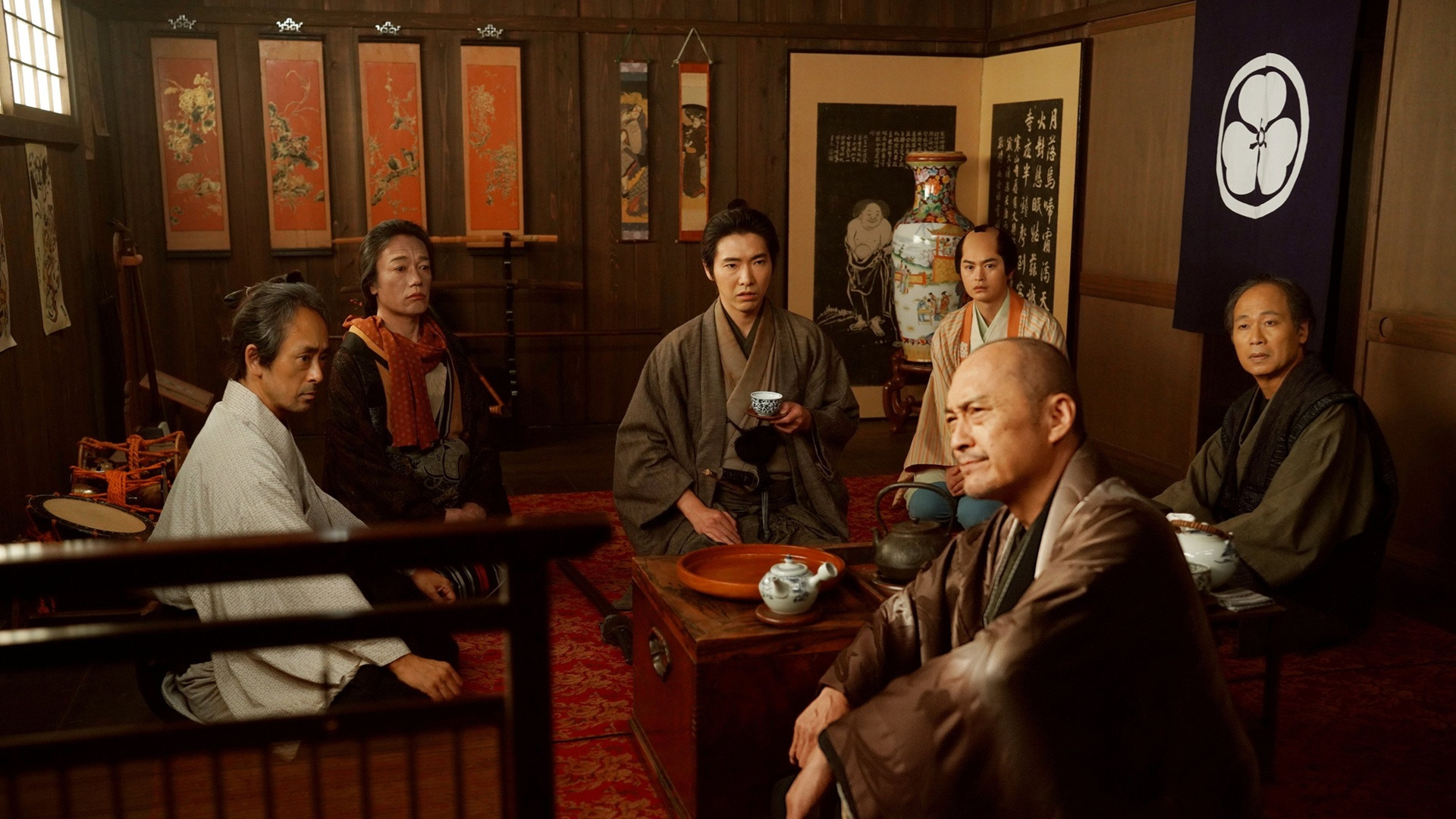
Central to the point I’m making, the performances of the cast are what help propel Samurai Vengeance ahead of the pack. Tasuku Emoto is excellent in the lead role, but a surprise appearance from Ken Watanabe as the owner of Morita-za’s theater adds a level of gravitas to everything. His recounting of past events demonstrates how important every movement and facial reaction can be when selling a story. There are far too many side characters to bring up, but they are all integral in grounding this story in believability. An ending montage of the actors even has them posing in kabuki stances, further establishing the performative nature of this film’s story.
Now, I wouldn’t say Samurai Vengeance is a perfect film. There are some bits that drag on a little, but we’re entering the area of extreme nit-picking. I think some of the joy of this film is also not entirely unique, but I don’t even know what I’d complain about. When you’ve watched as many films as I have, even twists that flip a story on its head won’t hit as hard since you’ve witnessed the same gimmick before. For the second time this year, I’m very happy I don’t need to apply a score to this review because it might set people up to misinterpret what I’ve written.
So, instead of dragging this out, I’ll end this by saying that I thoroughly enjoyed Samurai Vengeance. While not as remarkable as Bushido from a few years back, it’s another entry into a storied genre that is sure to captivate the right audience. If you’ve ever fallen in love with a movie specifically because of its acting, you’re bound to find the message central to this film as poignant and beautiful.
0 Comments Add a Comment?