NYAFF 2026 Review: Lovely Death
One of the distinct differences between critiquing films and video games is that films often don’t have their technical merits discussed at large. While there is a whole industry around setting a scene (Mise-en-scène, in fact), not to mention cinematographers picking locations and doing blocking for specific moods, most criticism is focused on the more human elements a story can elicit. Video game criticism, conversely, almost always starts from a place of technical discussion because it can make or break an experience.
If you’ve been around gaming forums for even a short period of time, you’ve liked heard frame rate come up as a talking point. A lot of players feel very strongly that higher frame rates result in better games, myself being one such individual. In a film, frame rate isn’t brought up like that as the average person understands it more in terms like “slow-motion” or “speed up.” Directors and editors have control over frame rates in films to create specific moods or results whereas video games are a player-controlled experience, and thus lowering the frame rate directly impacts playability.
Anyway, all of that is to say that the most interesting thing with director Lee Won-suk’s Lovely Death is its presentation. While an intriguing premise for a film, most people are not going to get over the fact that it is shot like a Tik-Tok video. I suppose it was only inevitable for a 9:16 film to release, I just wasn’t sure I’d see it mixed with such serious source material.
Lovely Death
Director: Lee Won-suk
Release Date: July 25, 2026 (NYAFF)
Country: South Korea
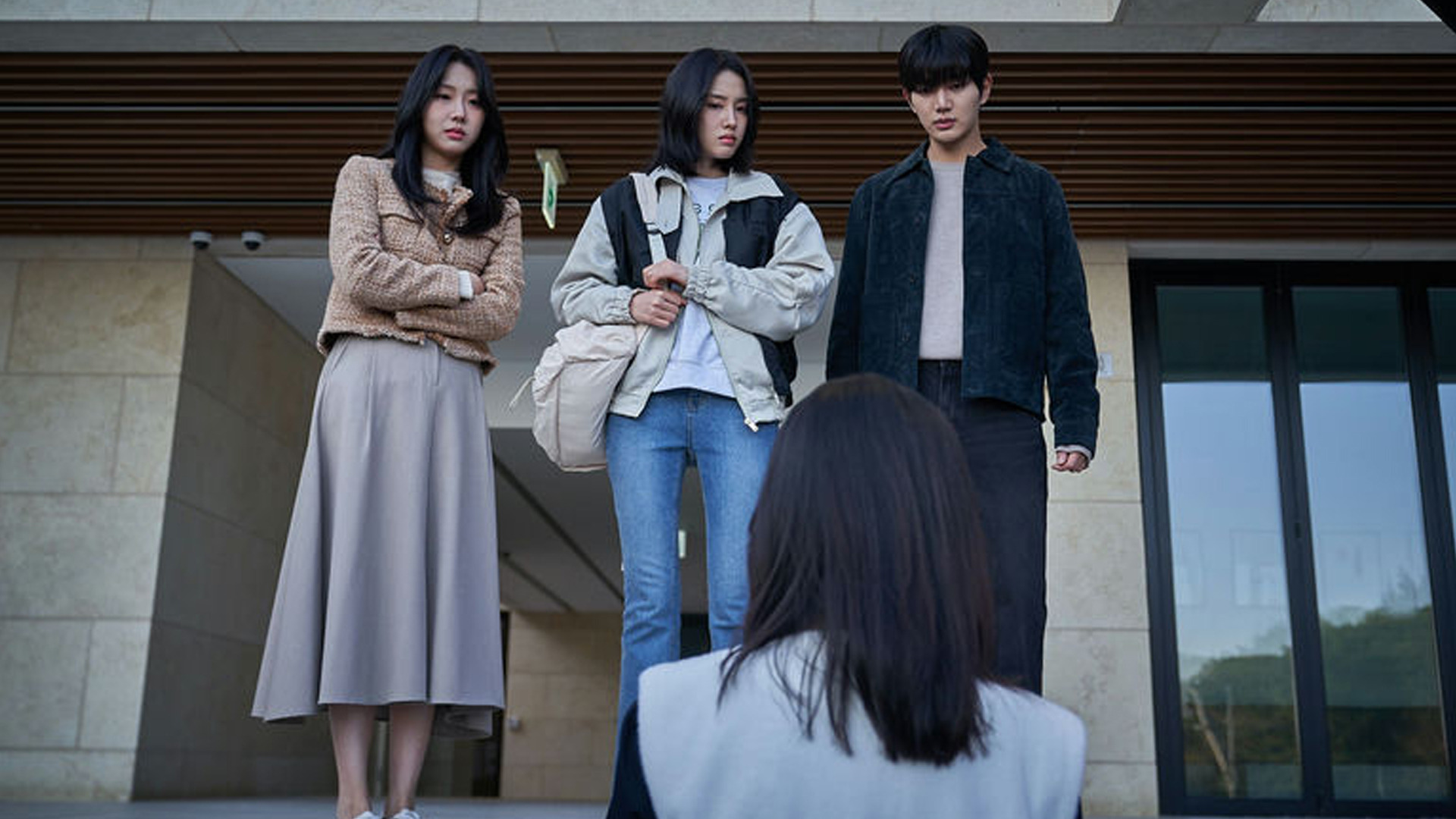
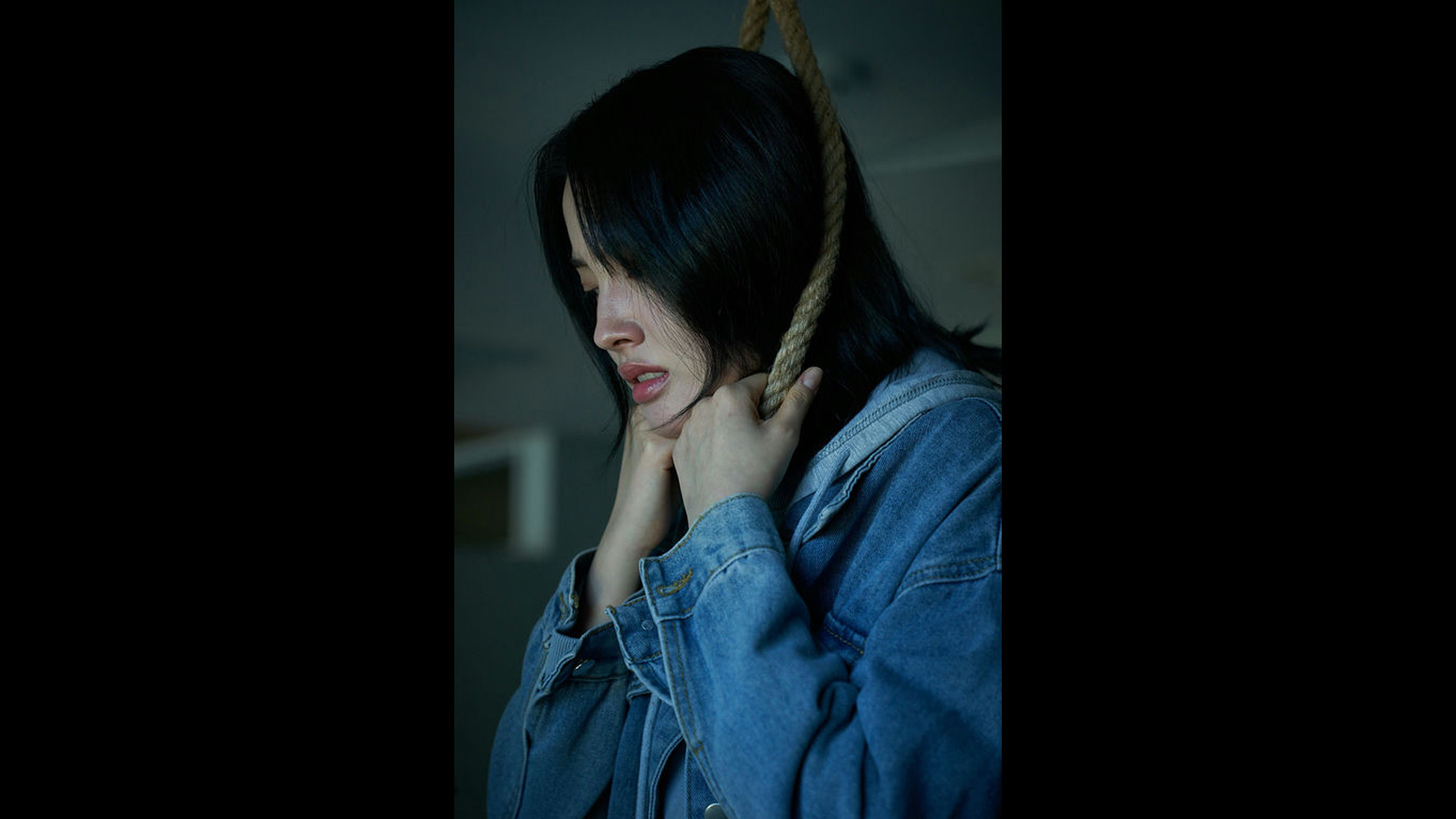
Let me back up and set the stage for Lovely Death’s story before going into a broader discussion on technical efficacy. The premise at the heart of this dramedy is that three young women make a suicide pact with each other that they’ll meet at a remote hotel and take their own lives at the same time. Starting with a shot of the main girl, Yeon (Shim Ja-Yoon), sliding her neck into a noose, I can’t say it doesn’t make a shocking first impression. When she kicks the chair away, something bizarre happens: she doesn’t die. In fact, Death (Nam Jung-woo) comes to her and winds up revoking her right to die. That’s certainly an interesting wrinkle.
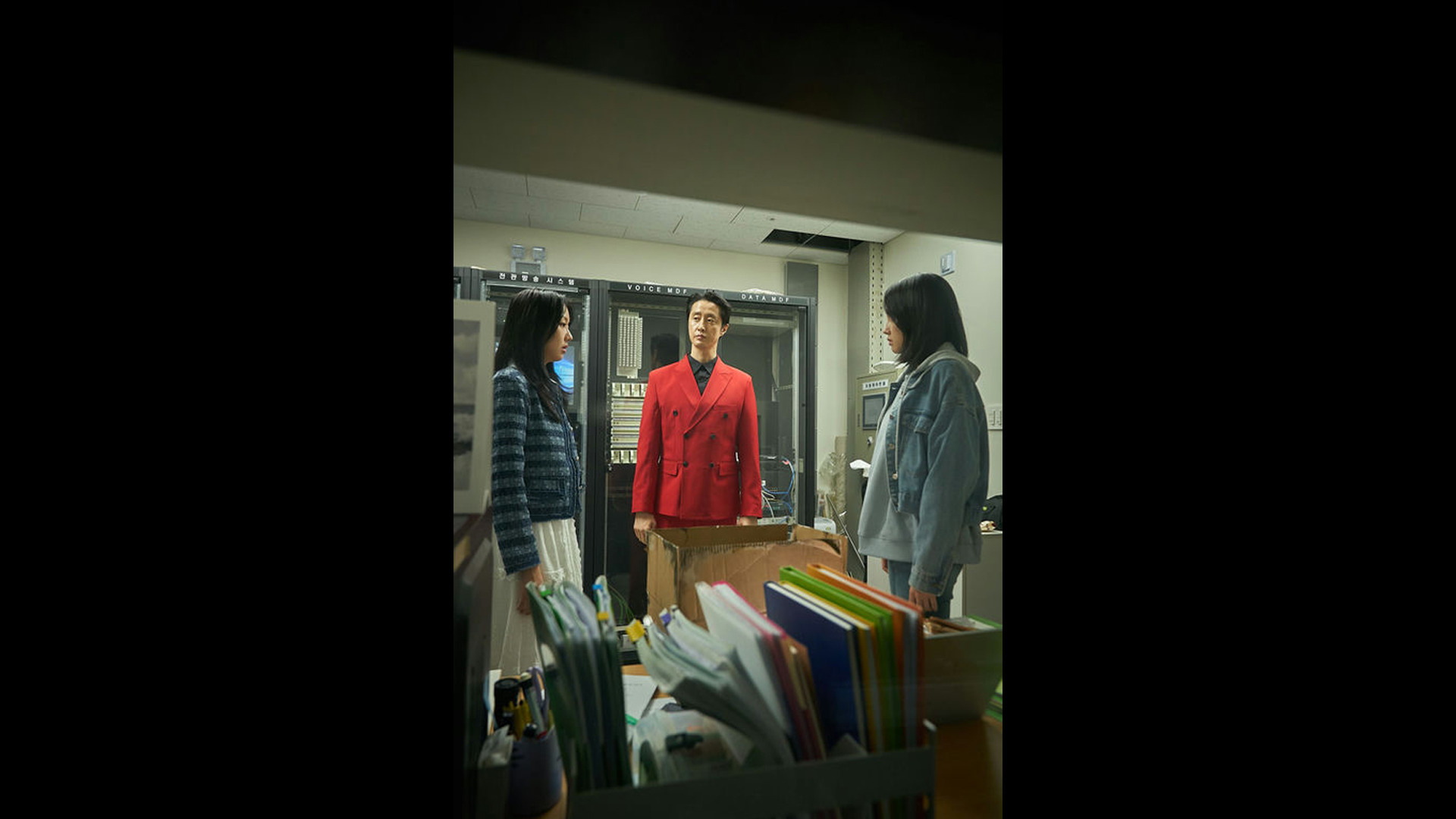
From here, Yeon and her friends, Yi-rim (Min Ka-rin) and In-hee (Jo Ah-young), are tasked with finding “The one who ran away” from Death so that he can collect their soul, thus re-granting them their right to die. The trio sets off on an adventure to uncover some murder plot about people poisoned at the very same hotel, which winds up showing Yeon that she actually enjoys life, etc. It’s kind of predictable, but filled with darkly comedic moments that made me chuckle.
The problem, though, is that the majority of my time spent with Lovely Death was struggling to figure out what was going on in the picture. I’m sure we’ve all seen vertical videos by this point, but those are typically meant for viewing on a cellphone and for quick clips rather than extended narratives. I know filmmakers have dabbled with creating “short form” content on social media platforms, but I never expected someone would take that framework to feature length proportions.
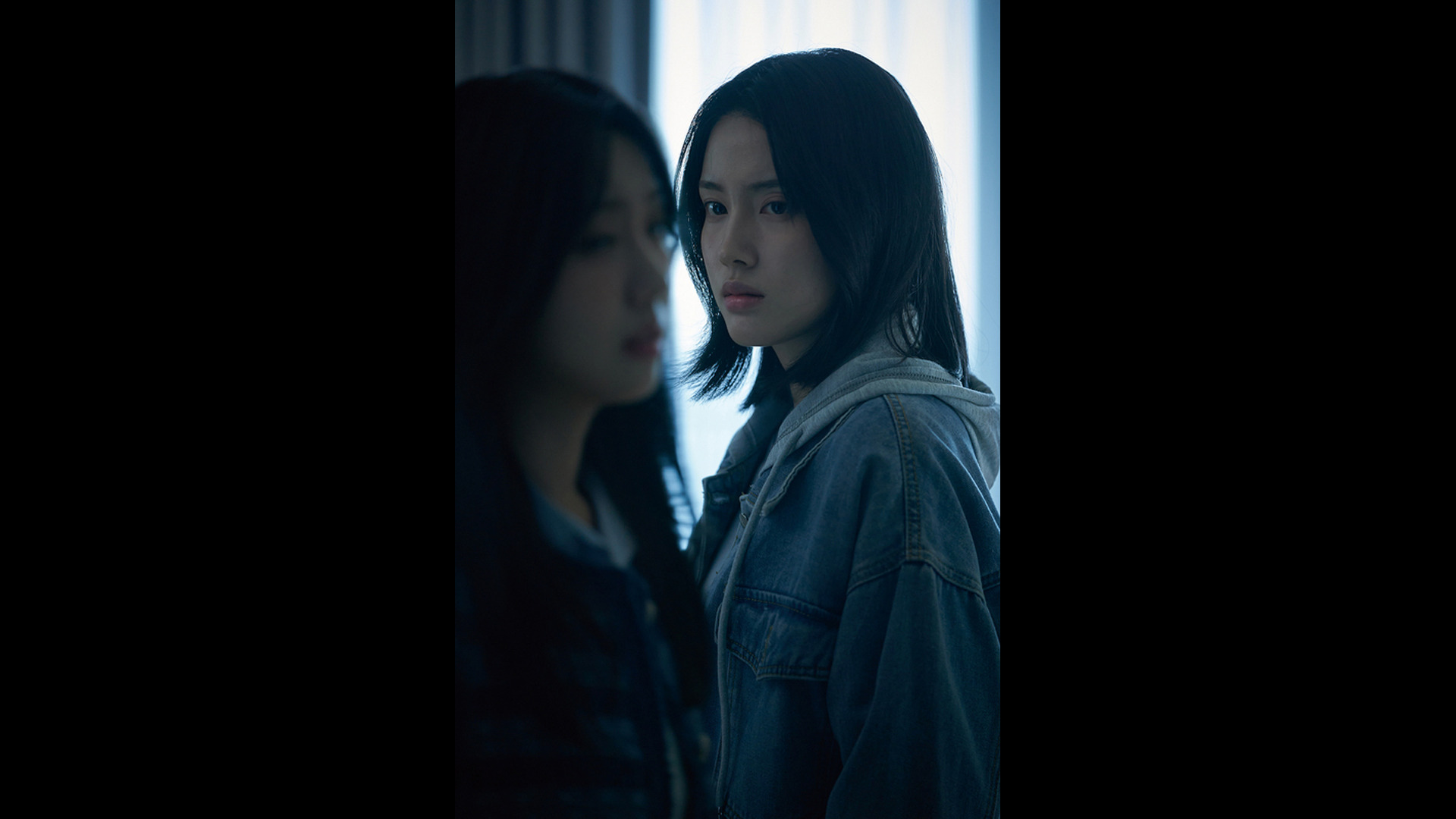
Since the New York Asian Film Festival gives critics screeners that are sometimes unfinished prints of films, I started Lovely Death assuming I had clicked the wrong link. I was playing it on my TV, initially, and the sheer amount of black space around the frame was distracting. I was surprised at how well things were situated within the confines of the limited view port, but no one wants to squint at the middle of their television for 99 minutes. Then, I tried to see if I could watch the film on my phone, but the actual video file was encoded in widescreen, meaning those black bars were baked into the picture.
I suppose you could relate this to older generations getting upset that their TVs don’t “display the whole picture,” but there are often very good reasons for why filmmakers choose to frame their stories the way they do. I can get into an entirely separate breakdown of the various aspect ratios film is shot in, but seeing something in 9:16 is distracting. It doesn’t allow the cinematography to breathe, not to mention closeups take on an extra level of intimacy because you can literally only see a person’s face and maybe some of their upper body.
Now, I did pay attention to the film and its story, but too often was I reminded of the fact that I was watching a film. I know movies are fake and audiences have to buy into a suspension of disbelief, but being a gamer since I was a child, I’ve never had a problem allowing myself to be sucked into a fictional universe. Strangely enough, I could compare Lovely Death to the experience of playing VR games, where the very hardware and the limitations it works around create a disconnect between the intended experience for me.
VR is meant to be the final bridge between merely playing a video game and actually living inside of it. Instead of having that type of experience, however, I often clash against the fact that I can’t sprint with my physical body while controlling a character. Having to hold weird wand like game pads instead of using my hands is another reminder that this type of technology simply isn’t there yet, though I’m not sure if developers and creators should be pursuing some type of Matrix jack-in method that hijacks our nervous system.
All of that is to say that VR doesn’t work because I’m too often reminded that it is fake. The bizarre aspect ratio of Lovely Death did the same thing for me. I think the story, at its core, is a really fascinating way to approach discussions about suicidal ideation and the harm that can cause to one’s brain, but seeing it told using only 20% of my TV robs it of dramatic effect. At one point in the story, Death says to Yeon that, “In the past you desired death, but your heart is in the present,” and that hit me like a ton of bricks. As someone who has dealt with depression for what feels like an eternity, I do understand how aging and separation from traumatic events can alter what you want from life. At the same time, you so rarely see two people in the same frame speak to one another kind of it robs that moment of the human impact it should have.
There are a lot of unknowns when it comes to this movie, however. I’m not sure what director Lee Won-suk hopes to achieve with this specific look, nor if it’s even meant to be the final presentation. Obviously, framing a film in a vertical orientation is a statement of intent, but to what end? Is it that younger generations will only view movies from their phones, so we should cater to them? The only pieces of information I can find are that Lovely Death is meant as a “short form” movie, and that it was adapted from a webcomic called 사랑하는 죽음. Reportedly, the film’s release in Korea will be broken up into chapters, of which the version NYAFF is showing is likely a compilation of everything.
When taken as 10 eight-ish minute episodes, I could see Lovely Death working a lot better. For one, you could watch it on your phone and rid yourself of black void surrounding everything. For two, the story unfolds in an episodic manner, so it would naturally fit as a piecemeal experience. Everything is already broken up into chapters, so it wouldn’t be a stretch to cut them and release them individually. That is seemingly the intention, at least according to one website.
Maybe the prospect of watching a movie on a phone would make David Lynch cry, but then people said the same thing about home video years ago. I know this review is less about the film and more about how we watch movies, but that is the most striking thing about Lovely Death. Ignoring that to talk only about its plot would be doing a disservice to how I feel after sitting with it for a few days.
In time, I’m positive we’ll start to see more films shot like this. By then, hopefully a new cinematic language will be developed that better caters to the limited view point. For now, what I can say is that I’m unlikely to forget about Lovely Death solely due to how it is viewed in a very literal sense.
0 Comments Add a Comment?