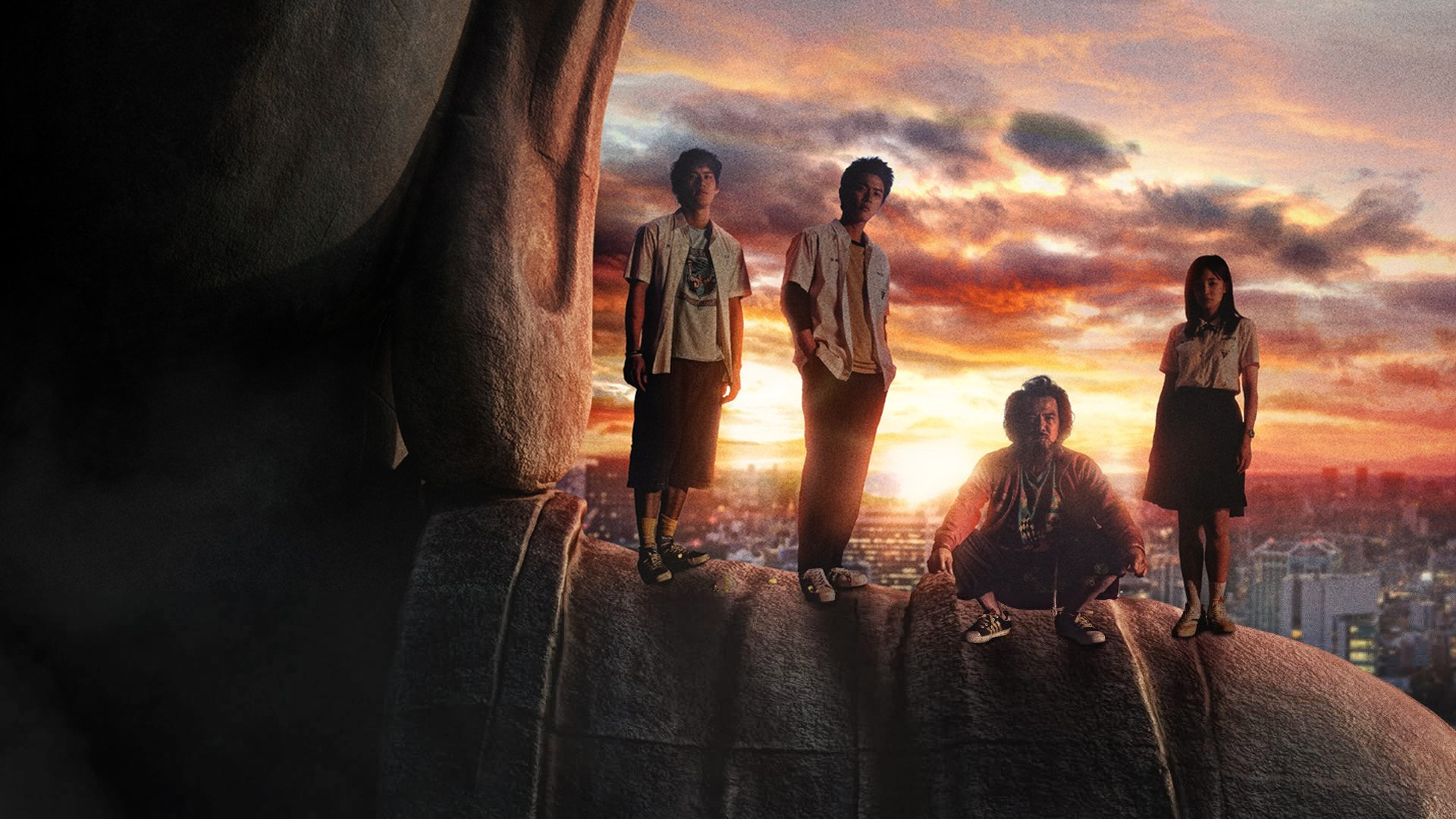
NYAFF 2026 Review: Kung Fu
Despite having first seen Kung Fu Hustle in theaters 22 years ago, I’ve not seen many filmmakers attempt to ape that movie in terms of scale, comedy, or nostalgic homage. Writer/Director Stephen Chow is seemingly only now getting back to doing similar projects, and while Hong Kong filmmakers still produce comedies, they don’t often blend martial arts, special effects, and reverence with them. While other Asian countries have picked up some of the mantle, these films have mostly been relegated to pure action rather than trying to combine different genres into a singular whole.
That’s what made the trailer for Giddens Ko’s Kung Fu so enticing. With a title like that, I initially thought this would be a straight action film, but the trailer highlights the more outlandish elements that Ko has incorporated. There’s a mixture of funky special effects, larger than life action bits, gross out humor, and genuine reverence for the past that instantly reminded me of Kung Fu Hustle. Was someone finally trying to one up Stephen Chow’s masterpiece?
In one way, yes. In another, I’m not quite sure. Kung Fu is a complicated bit of filmmaking that is reminiscent of what Chow did two decades ago, but one that also feels more in line with something you’d see from Johnnie To. It’s very good, but also kind of lost in its own sauce.
Kung Fu
Director: Giddens Ko
Release Date: February 6, 2026 (Taiwan), July 23, 2026 (NYAFF)
Country: Taiwan
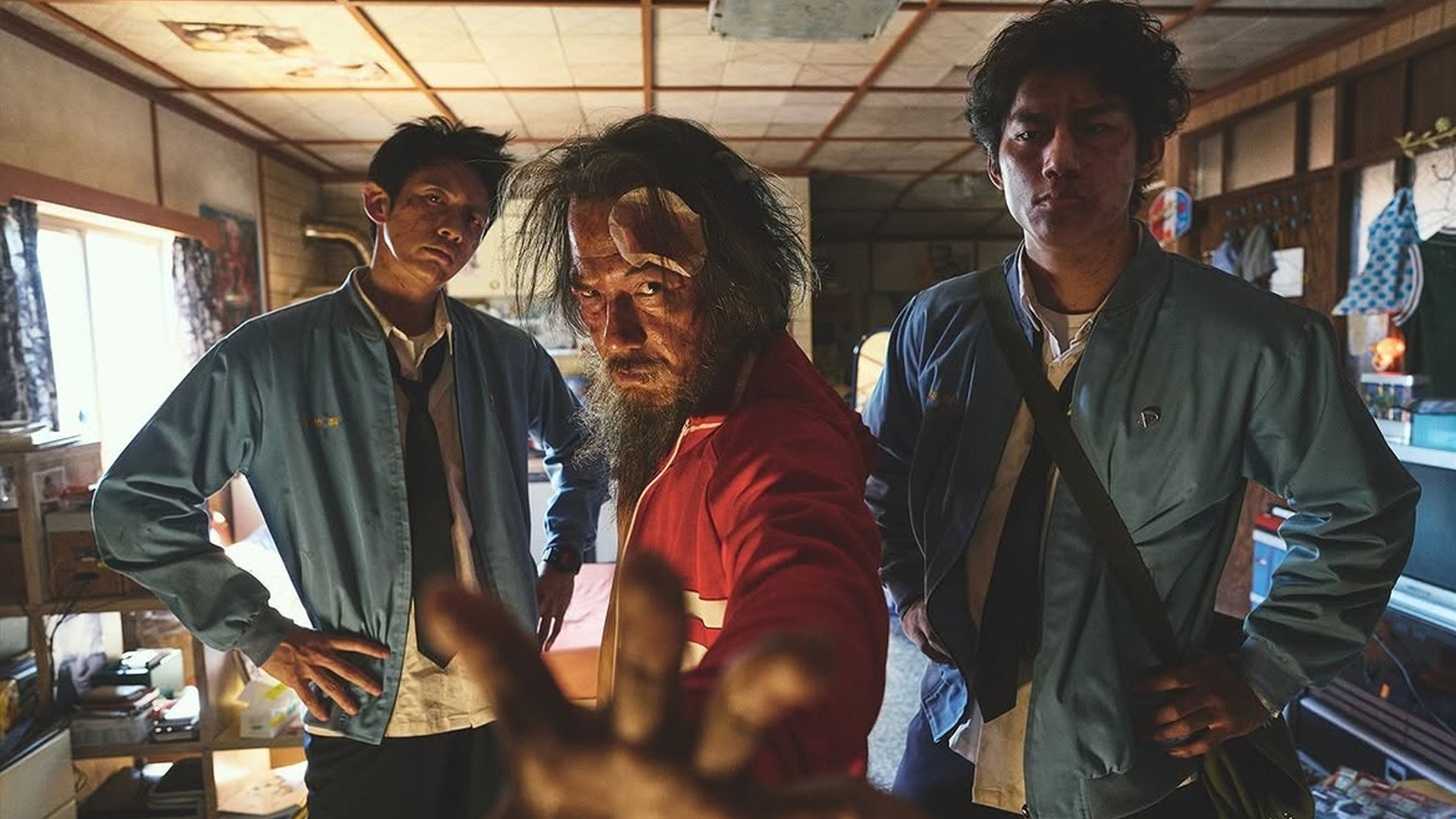
Adapted from the cult novel of his own writing, Kung Fu is a ludicrous mixture of action filmmaking, special effects driven spectacle, and genre homage that pulls from various different pop culture influences and Eastern philosophy to tell its frankly batshit story. The basic premise sees high schoolers Yuan-zai (Kai Ko) and Yi (Berant Zhu) aid an old man (Leon Dai) after he is beaten by some punks for preaching some wacky philosophy to them. Showing some human decency, the old man attempts to recruit them as students for his special form of martial arts, which initially freaks the duo out. Eventually, the old man demonstrates his power and the kids become enchanted by the possibility of becoming a martial arts god.
While clearly outlandish, the old man explains that he is an ancient Kung Fu master named Huang Jun who has been alive for at least 500 years. After some freak accident left him buried for centuries, Jun has emerged years later and is looking to pass his knowledge on to the next generation. They need to be ready to stop the threat of Lan Jin (Liu Kuan-ting), a madman who grew intoxicated with power and killed both Jun’s sifu and his lover, Flower Cat (Esther Huang).
There are some typical coming-of-age tropes included along the way, such as Yuan-zai having a thing for his classmate, Jing (Gingle Wang), juvenile sex comedy in the form of masturbation jokes and the like, and struggles with bullies at school, but the broader whole of Kung Fu mixes expected plot points with wild imagination and utter madness. A major theme throughout the film is that of “the power of belief,” which Ko cited in an interview to be pulled from The Matrix. Jun even notes that physical skill only makes up about 30% of martial prowess; the rest comes from believing in the dream.
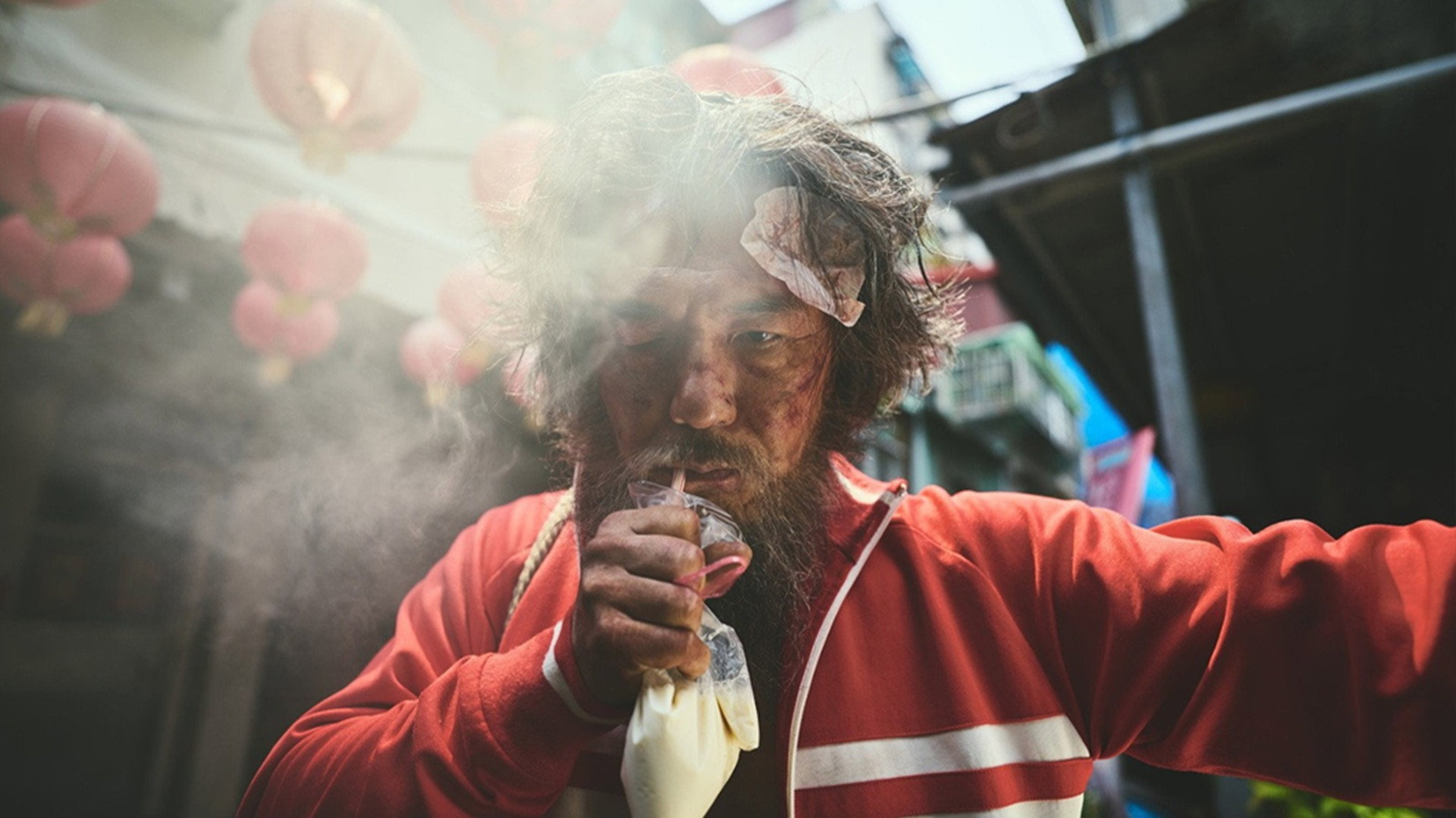
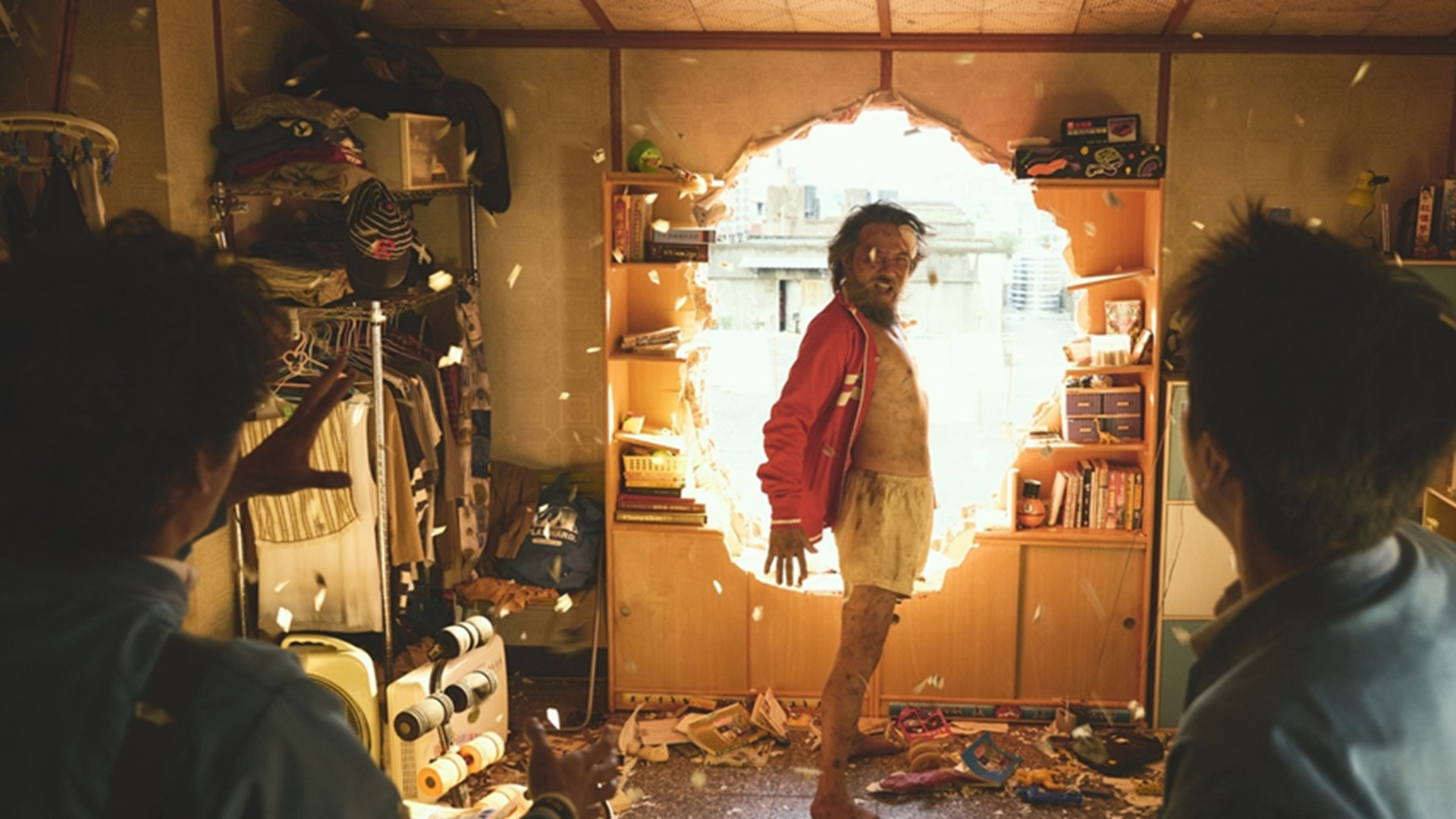
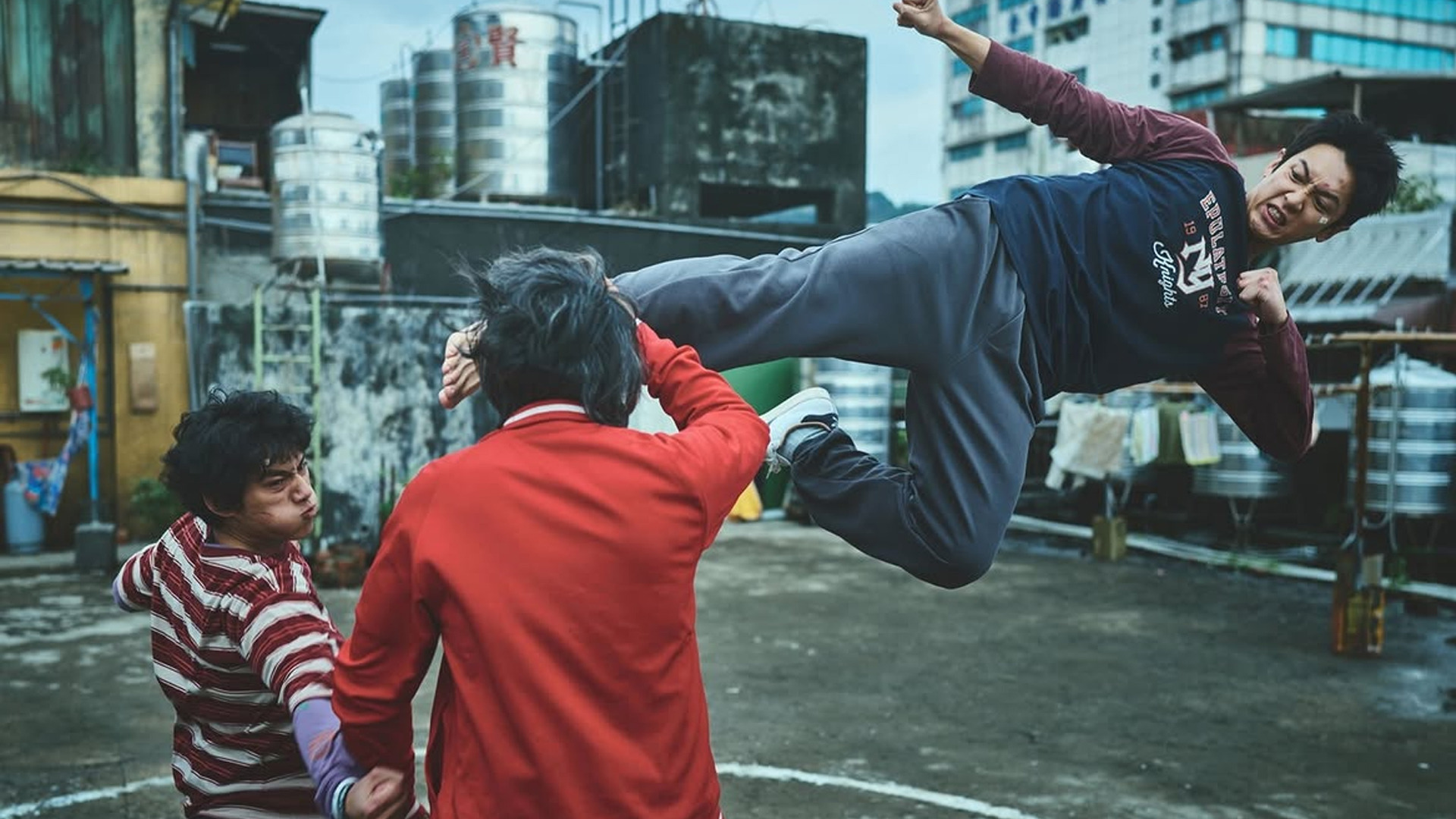
I think that’s a smart way to explain a lot of the larger-than-life segments here. Since this is an effect driven spectacle, there is copious usage of CG to enhance typical wuxia movie moments. When Jun demonstrates his overall power, he blows a hole through Yuan-zai’s wall and while that could have been achieved with practical effects, it wouldn’t have the same impact as seeing a neighborhood cluttered with paper, broken boards, and bits of brick. The high-flying antics of some of the fight scenes are also propelled to another level because of the powers Jun teaches, with both boys (and, eventually, Jing) jumping several stories through the air like they live in a Dragon Ball world.
The film doesn’t immediately begin with that, however. There is a montage of classic Hong Kong films that kicks things off (similar to how The Forbidden Kingdom paid homage to the classics), but the movie seemingly takes place in our actual world. Both Yuan-zai and Yi initially don’t believe in Jun’s proclamations because they sound like the ramblings of an insane man… which isn’t helped by Jun being found in a straightjacket. Who the hell can actually fly through the air, punch holes through walls, or kill a man with just their fingers? What if he wasn’t insane, though?
That premise maybe isn’t new, but it’s pulled off with enough confidence and style to become compelling as a hook. It’s easy for us, as viewers, to accept that a film is a reflection of reality rather than a documentary. What if the story was framed as actually being reality, then? Maybe the enduring legacy of martial arts cinema has lived on because it makes those fantastical elements at least somewhat tangible. Could it be that we can’t leap multiple buildings simply because we don’t believe we can?
Now, I haven’t gone insane from watching Kung Fu, but it speaks to the broader point that Ko wants to impart on viewers. We all have the power to unleash our inner strength if we have faith in ourselves. We’ll clearly never be running along walls, doing 16 backflips before landing, or taking blows to the head and shrugging them off, but we can achieve more than we realize with some simple faith. And for roughly 85 minutes, Kung Fu spins a fascinating tale of overcoming obstacles, building friendship, and achieving the unthinkable, while occasionally featuring gross out humor.
One standout sequence comes early on when Yuan-zai and Yi first start their training. Jun has the boys get into a horse stance and tells them that their inner strength will be unlocked when they get bitten by venomous snakes. He hurls handfuls at them, and after being viciously mauled, they start convulsing and spewing foam from their mouths. It’s very exaggerated and reminiscent of stuff Joseph Kuo shifted to in his later career. When Jing is eventually inducted into the group, her reaction to it is even more pronounced, with a hilarious close up showing her beet red face and sagging eyes as if she just became a zombie. Kai Ko’s reactions as Yuan-zai are also fantastic, with enough cheese to grate several pizzas.
It’s really in the final act that Kung Fu loses focus of what I believed to be its core meaning. During my initial watch, I started to notice some similarities to the Wai Ka-Fai and Johnnie To film Running on Karma. That movie starts with a wacky premise where Hong Kong superstar Andy Lau is wearing a muscle suit and working as a male stripper, but transforms into a deep musing on the nature of karma and the paths our lives take when karmic debt is owed. Kung Fu does something similar, though as stated, it centers on the power of belief and how we can manifest strength from pure determination. It’s just too bad that Ko assumed audiences wouldn’t understand a metaphor, because the film explains the shift as literally as it can.
I won’t spoil exactly how this is divulged, but it turns Kung Fu into more of a sci-fi parable instead of one about martial arts. I don’t think this ruins Ko’s general message, but it did lessen my enjoyment of what I thought was shaping up to be a grand thesis on personal strength. The twist also detracts from the Kung Fu homages the film has, which includes an incarnation of Bruce Lee as a spiritual mentor and a bunch of Shaw Brothers-like characters.
I think it’s really this desire to include some shadowy organization that undermines what could have been a straightforward wuxia film. Maybe Ko has bigger aspirations than I can understand, but I don’t think starting from the point of “this is our real-world” means you then have to finish within the same framework. Taking The Matrix as an example, that movie starts with some cool action, but leads viewers to believe Trinity is actually able to bend reality to her whims. It’s through some careful sci-fi world building that we understand life, as we know it, is a simulation and Neo and crew are manipulating a fictional setting. Maybe Ko wanted that for Kung Fu, but the execution of his idea doesn’t land.
Even with that drawback, and the rather bloated finale, I still had a blast with Kung Fu. Maybe I’m getting soft in my old age, but I didn’t find any of its CG overly distracting (save for one scene of the two leads jumping on power lines). It was utilized to exaggerate a point that should be embellished. When you’ve become a wuxia god, reality stops mattering. We’re in an era where actors don’t need to rely solely on wires to achieve that, either, so why not go big?
Kung Fu won’t go down as an absolute classic like Kung Fu Hustle has, I can say that much. As far as Taiwanese productions go, though, this is sure to be the biggest film that specific industry has produced for quite some time. That it’s a loving homage to the type of cinema I grew up with and uses that framework to push it a little further is also something I appreciate immensely. Maybe not everyone’s cup of tea, I’m glad I saw Kung Fu and will be talking about it for quite some time.
0 Comments Add a Comment?