
NYAFF 2026 Review: Girlfriends
As a cisgender hetero man, it can be difficult for me to understand the pain that marginalized groups go through. While I’ve faced my own share of discrimination due to my depression, that doesn’t compare to the vitriol LGBTQ individuals face merely for existing. I know suffering isn’t a contest, but I’ve always tried my best to approach others with an understanding of their pain to not perpetuate the cruelty imposed on them. That same mentality follows for cinema targeted at said groups, of which Girlfriends very much falls into.
Told through the perspective of a woman at three different periods of her life, Girlfriends is a semi-autobiographical story directed by Tracy Choi. A lesbian filmmaker from Macau who has been creating movies for more than a decade now, the aim with Girlfriends is to show the struggles lesbian women face in a country that still doesn’t accept them fully (I know that can apply to literally any country, but this is specifically a Macanese thing). It also highlights how these different girlfriends helped shape Choi, at least, that’s what I initially thought.
Maybe a result of being a bit unfocused while writing, Girlfriends stumbles a bit in its first act before tying things together in its next two. Then it kind of drops the ball at the end again, but not to the point of ruining the experience. It’s complicated, which is maybe intentional.
Girlfriends
Director: Tracy Choi
Release Date: September 25, 2025 (BIFF), March 5, 2026 (Macau/HK), July 23, 2026 (NYAFF)
Country: Hong Kong
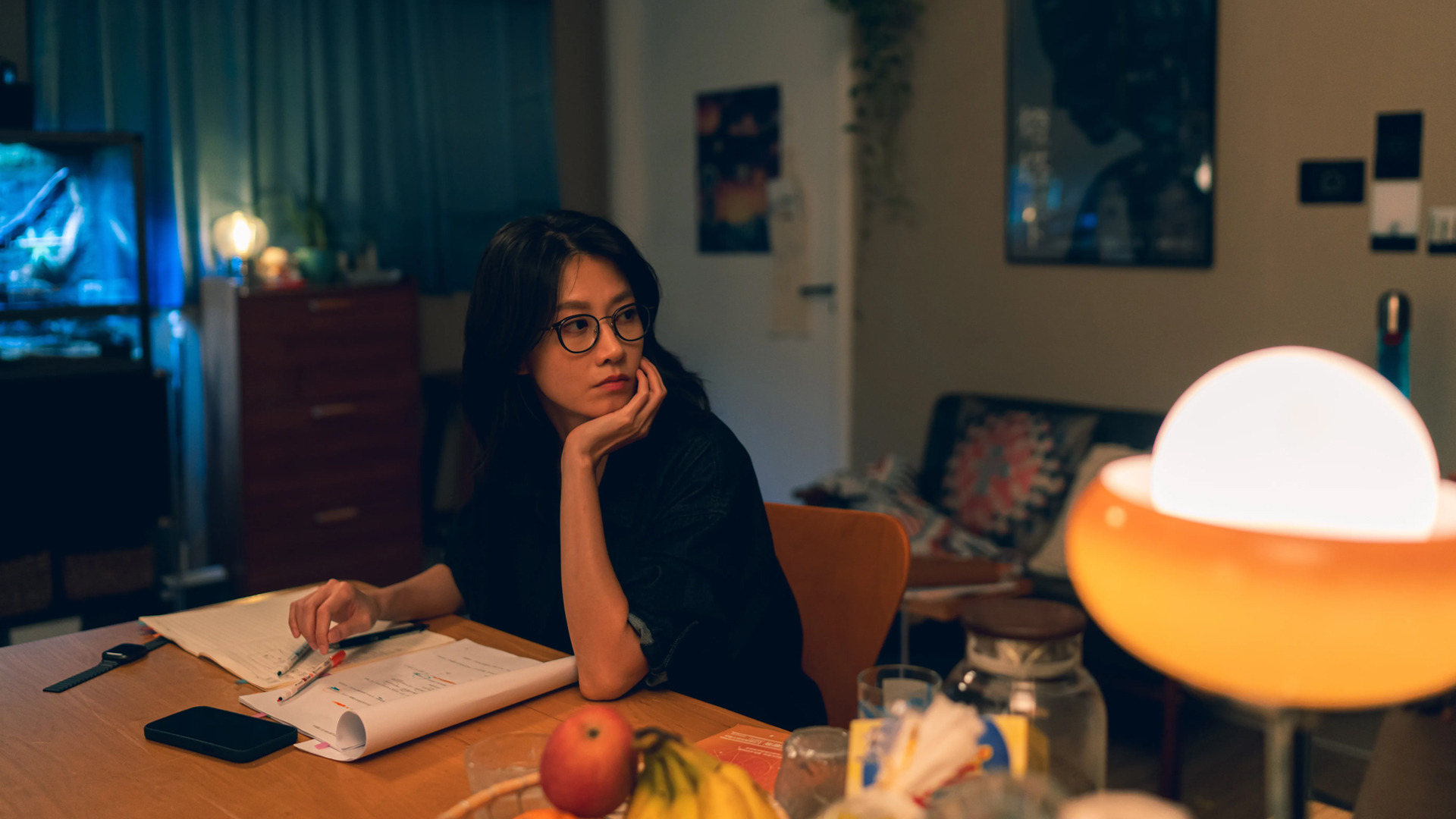
As I mentioned above, Girlfriends is a story told from multiple points of a woman’s life as she struggles with her current life. Starting in 2024, Tsui Lok Yan (Fish Liew) is living a mostly happy life with her girlfriend, Bei (Jennifer Yu), in Hong Kong. Having directed a couple of movies and now mostly jumping between part-time work and teaching, Lok is aimlessly drifting with no real idea of what the future holds for her. It’s not until Bei starts to get more serious about living a conventional life in Macau that Lok starts to fight against that, nearly ruining a relationship that isn’t culturally accepted in the first place. At her lowest, she reminisces about the past to see where things may have gone wrong.
Part two takes place in 2010 in Taipei, Taiwan. As a student in university, Choi (Elizabeth Chong), as she is known, is pushing her classmates to take a stand against injustice with their final project. At the same time, she’s in an extremely physical relationship with Kai Ching (Han Ning), who can never quite get a straight answer from Choi on what she wants. With pressure from her parents to return to Macau after graduation, nothing seems to be going her way.
The third part winds back to 2006 Macau, where Yan (Natalie Hsu), as she was going by, is in her final year of secondary school. Mostly being pushed to attend the University of Macau by her parents, Yan doesn’t have any real goals or desires in life. It’s not until she meets Faye (Eliz Lum) that she gets a fire lit in her soul. She awakens to the idea that maybe her parents don’t know best and that she should be blazing her own trail in life. She’s also seduced by the prospect that Faye will be attending college in Taiwan, which pushes Yan to take an entrance exam for university there.
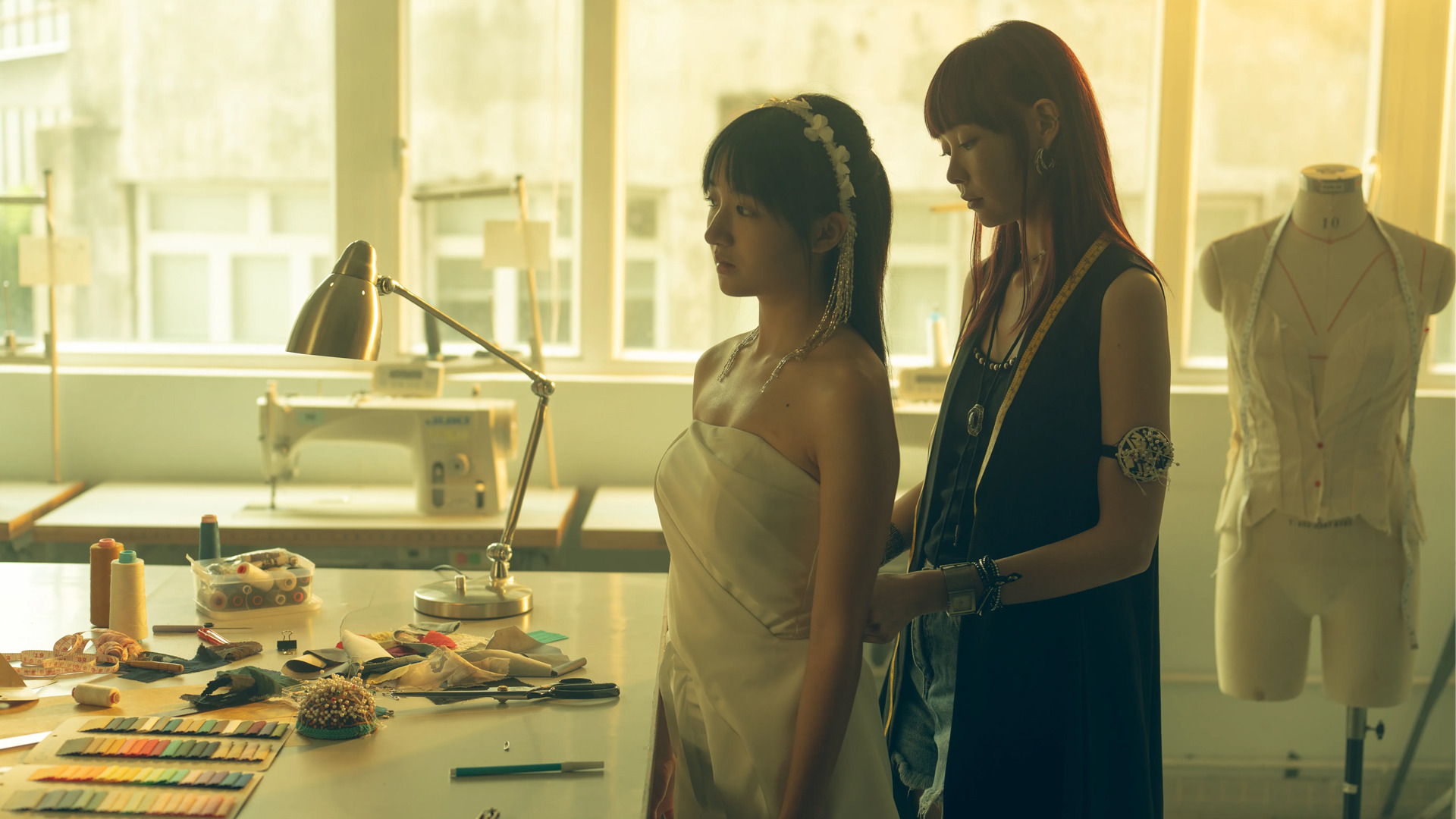
I apologize for summarizing so much, but I felt it difficult to really convey the struggles Girlfriends has for Lok by only stating it’s something of an anthology film. When I first saw the poster late last year, I thought it had followed three different groups of women, but the idea proposed by Girlfriends is certainly more novel than that. Sadly, the writing for present-day Lok almost makes you wonder if the original idea was to have this be three different reflections of Tracy Choi’s life rather than one ongoing story.
What I mean is, for roughly 40 minutes while following Lok, the general mood of Girlfriends appears to be about how adult life sucks the passion out of living. It’s not a bad idea for a film, but there isn’t much in the way of reflection on the lesbian experience in modern Hong Kong. Lok and Bei are mostly doing fine as a couple with Lok struggling from a creative perspective more than anything. She kind of freaks out when Bei mentions Macau more than getting married or having kids, which initially seems out of nowhere, but slowly starts to make sense.
Parts two and three, however, feel connected. Choi comes off like a young adult would in a college environment, freer than she was back home and more expressive with her identity. Her orange hair is a dead giveaway, but that she’s openly protesting and pushing her classmates to speak truth to society pegs her as the fiery spirited youth that get things done. The contrast of when we flash back to Yan, who is timid, unsure, and sort of lost does feel like proper evolution of a character.
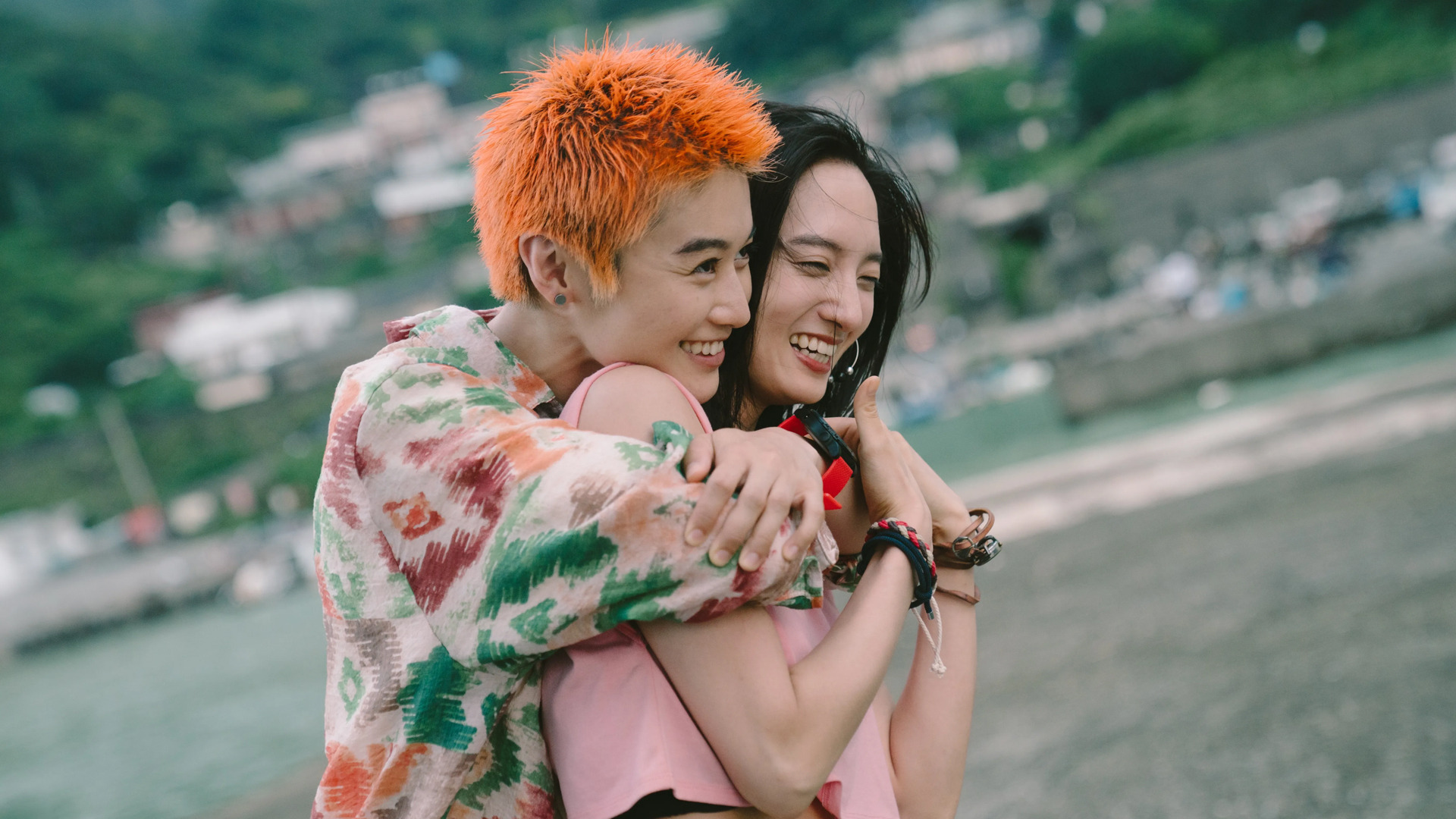
Each story has a different theme, with the first being about waiting, the second choices, and the third heartbreak. You can tell there is a through line stringing them together, just that the latter two confront the lesbian experience directly rather than the broader societal one. Yan would have never opened up to her inner desires if she didn’t meet Faye, while Choi wouldn’t have widened the gap between her and her parents had they just accepted her girlfriend. I believe there is meant to be a rejection of family hierarchy there, with Choi not honoring her parents and burning a relationship just to prove a point.
It really is Lok’s story that misses the mark. I think actress Fish Liew does a really great job selling the ennui of life, but she comes off like she’s in a different movie. When the final act comes, and we’re back to Lok visiting her family in Macau, there isn’t really a reckoning with her past that pushes her to a new decision. It simply moves from, “I had my first heartbreak in Macau,” to, “Hey, I figured my shit out.” Maybe she realized there is no point in struggling anymore, but I don’t really think that was meant to be the message.
In an interview with Asian Movie Pulse, Choi explained how Girlfriends started to take shape during the COVID-19 pandemic. She initially conceived the idea with crosscutting between the different perspectives before settling on the reverse chronological structure. She also chose the cities not just because her life corresponded to those same places and timeframes, but because they exhibited characteristics that the main protagonist was grappling with. I can see that, as Macau is still a bit restrictive while Hong Kong is approaching a sense of “normalcy,” but that still doesn’t really explain why Lok’s narrative is less about queer identity.
Then again, Choi mentions in that same interview how queer relationships in media are often pigeonholed into heterosexual terms since society hasn’t learned to properly discuss them. Maybe that is the struggle I am feeling when reflecting on Girlfriends. I’m not super well-versed with LGBTQ cinema, even if I’ve watched a lot more of it over the last six years. I couldn’t map out a timeline of when the first queer movie was or what the most significant LGBTQ movies are. Certainly, I'm much more accepting of them then I was in my 20s, but maybe I simply never understood how to accurately approach them. Through that lens, Girlfriends is possibly putting something down I simply cannot understand.
That doesn’t make it a bad film. I would argue this is an overall great effort from Tracy Choi, who has seemingly crafted the exact film she wants. Not all movies are for everyone, and while I mainly watched this because of my connection to Natalie Hsu (I get to brag a little and mention I interviewed her at NYAFF 2025), I did walk away with more of an understanding for how lesbian relationships are viewed in different Asian countries. As in real-life, I will never truly know the anguish that LGBTQ citizens go through, so maybe it’s only natural that I wouldn’t completely understand Girlfriends.
0 Comments Add a Comment?